Space
▬Steady 40 recent stories · 1513 total mentions · Following ↗
-
The US Air Force awarded Boeing a $75 million contract for the initial production of the JDAM Long Range weapon. The contract is for the BSU-111/B Payload Delivery Unit used in JDAM Long Range.
-

The Air Force has identified three key priorities for its expected budget increase in FY 2027, according to Gen. John Lamontagne. These priorities were discussed at the 2026 Air and Space Summit. The budget boost is expected to support various Air Force initiatives and programs.
-
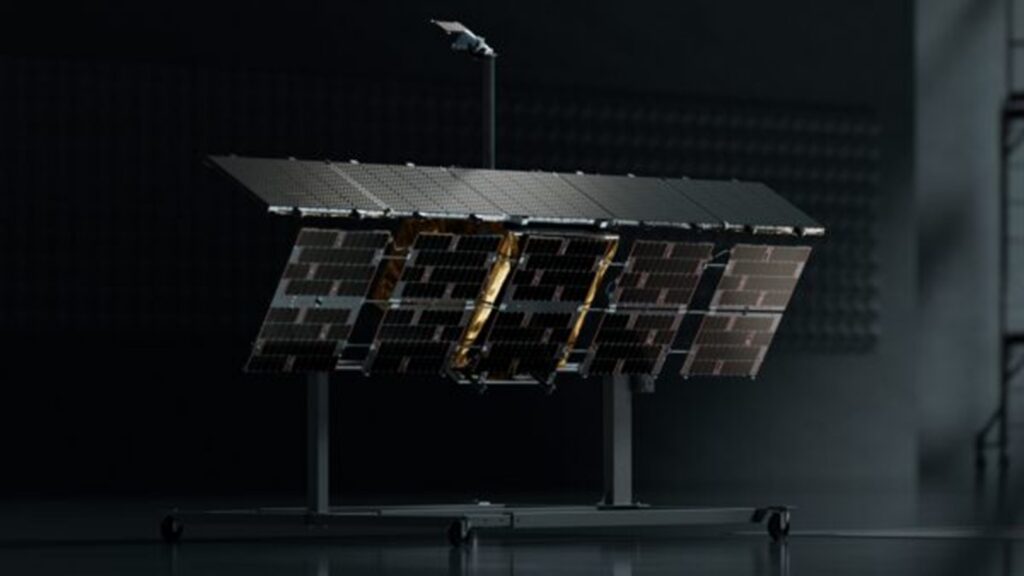
The National Reconnaissance Office has issued new contracts to three synthetic aperture radar satellite data providers. The contracts reflect the companies' successful demonstration of their capabilities under previous NRO study contracts. This development is related to the NRO's efforts to enhance its satellite capabilities.
-

The National Reconnaissance Office has awarded contracts to Capella Space, Iceye U.S., and Umbra to expand the use of commercial synthetic aperture radar. This move aims to enhance the U.S. government's capabilities in this area. The contracts will facilitate the provision of radar data from these commercial providers.
-

Multiple constellations are staking claims for communications satellites in non-geostationary orbit, posing a challenge to newcomers in the industry. The market is dominated by vertically integrated giants like Starlink. Newcomers face an uphill battle to establish themselves alongside these entrenched players.
-
China's commercial space industry is growing rapidly in scale and speed, prompting concerns that the US may be outpaced in industrial capacity and output. CSIS experts argue that US policymakers must understand these trends to stay competitive.
-

Neuraspace has raised €15.6M to scale its SDA service, which is related to the increasing number of satellites in orbit and the importance of space for defense ministries. This investment will help Neuraspace expand its capabilities in the space domain. The company's service is crucial for defense ministries around the world as space becomes a more significant domain.
-

Muon Space's new manufacturing facility in San Jose, California, has been inaugurated, highlighting the growth of satellite manufacturing in the state despite cost and regulatory challenges. The facility was praised by state, local, and US Space Force representatives. This development indicates a strong industry presence in California.
-
The Department of the Air Force and Texas have formed a commercial space alliance to accelerate technology for national security missions. This alliance aims to speed up military technology and strengthen US supply chains. The partnership will focus on commercial space technology for national security purposes.
-

The US Navy conducted a test over the Pacific Ocean, creating a plasma field in the upper atmosphere to study energy conversion and behavior. The Naval Surface Warfare Center has released new details about the test in a recent report.
-
ICEYE, a space intelligence group, has secured €1 billion in Series F financing, with the European Commission-backed Scaleup Europe Fund as a lead investor. This investment values ICEYE above €10 billion. The funding will likely support the company's continued growth and development of its space-based intelligence capabilities.
-

A think tank warns that Europe is at risk of becoming dependent on foreign orbital computing infrastructure due to the rapid development of space-based data centers by US companies and China's government. The European Space Policy Institute highlights the widening gap in Europe's orbital compute capabilities. This gap could have significant implications for Europe's space-based data processing and storage capabilities.
-

Leidos has reported a 7% increase in Q2 revenue to $4.56 billion, with net bookings of $4.9 billion and a funded backlog up 44% year over year. The company has raised its full-year revenue and earnings guidance. This growth is driven by a surge in defense sector bookings, with a book-to-bill ratio of 2.2.
-

SpaceX plans to start deploying upgraded Starlink satellites into orbit on its Starship vehicle, with the next flight scheduled for the end of the month. This marks a significant step for the company's Starship program. The upgraded Starlink satellites will be launched into orbit, expanding the company's satellite constellation.
-
The Space Force has awarded $615M in contracts for a second batch of aircraft-tracking satellites, building on a previous $4.16B award to SpaceX. The new contracts are part of the SB-AMTI program.
-

SpaceX and Nvidia are collaborating on a satellite that will utilize Nvidia's Rubin chips to power an orbital data center with AI capabilities. The satellite, called Starmind AI1, will take artificial intelligence beyond Earth's atmosphere. This partnership aims to enhance space-based data processing and analysis.
-
Russia needs China's assistance to quadruple its military space rocket production. This collaboration is crucial for Russia's military expansion into space. The partnership may have significant implications for global space security.
-
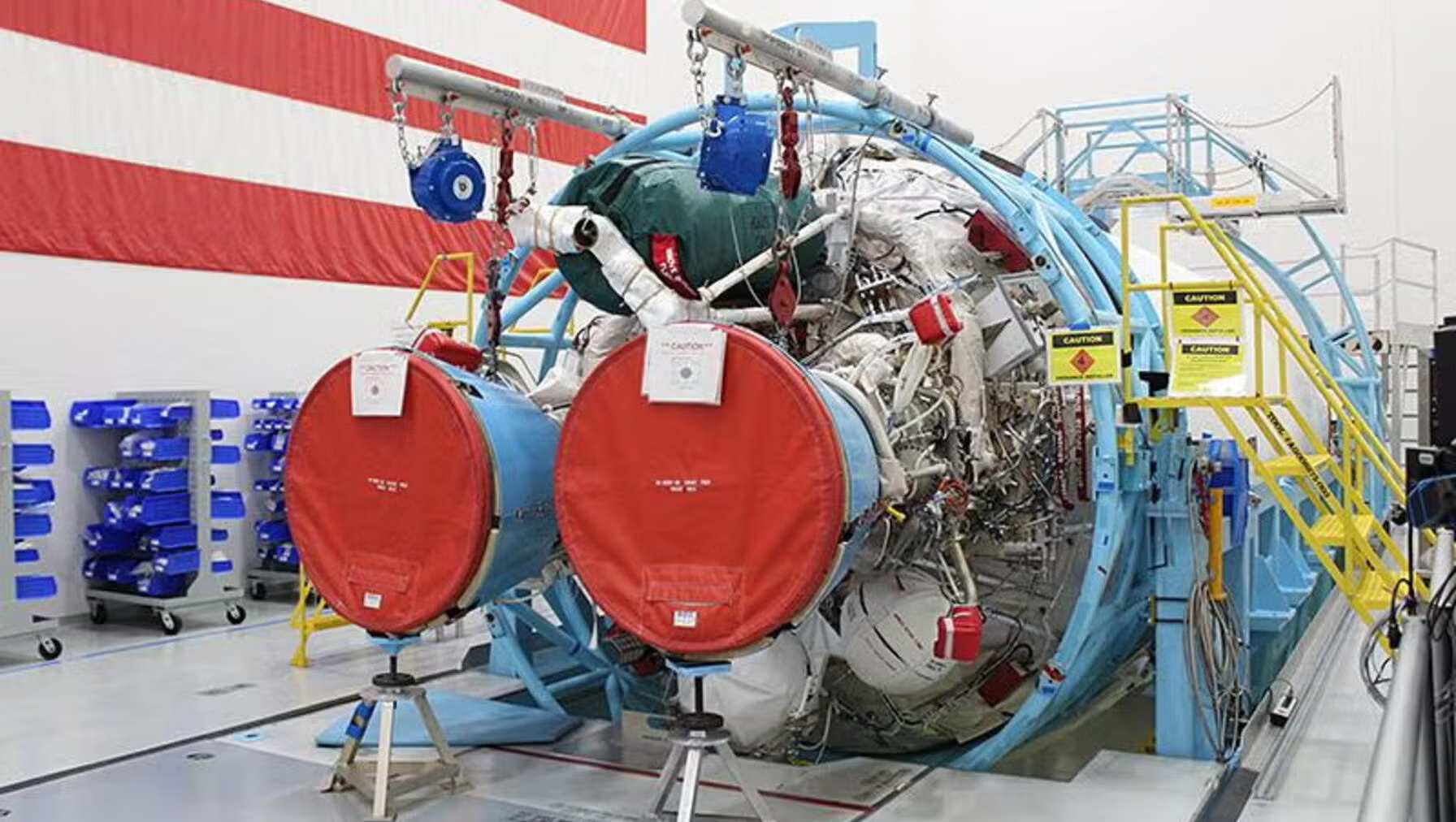
Private investors, through AE Industrial, have acquired a majority stake in L3Harris' space propulsion business, which will be re-established as Rocketdyne. The business has over 60 years of heritage in rocket engine manufacturing.
-

New research suggests that orbital data for satellite operators can be improved, which is crucial for decision-making. The quality and confidence of this data are essential for effective space operations. Improving this data can enhance the overall efficiency of space-based systems.
-

Startups and established manufacturers are investing in engines for small satellites to change orbit, driven by military demand. This investment is expected to shape the market for satellite propulsion. The development of these engines will provide small satellites with more freedom to maneuver in space.
-

Xona Space Systems has received FCC approval to broadcast its Pulsar navigation signals from a full satellite constellation, clearing the last regulatory hurdle before deployment. This approval allows the company to scale its deployment. The constellation is intended for PNT (Positioning, Navigation, and Timing) purposes.
-

Rocketdyne is now a standalone space company after AE Industrial acquired a 60% stake, with L3Harris retaining a noncontrolling interest. This move marks a significant development in the space industry. The company's new status is expected to impact its operations and future projects.
-

Ryan Lewis, NRO's SIGINT Chief Architect, will discuss next-generation space-based SIGINT systems and industry partnerships at the 2026 Intel Summit. The event, hosted by the Potomac Officers Club, will take place on September 24. Lewis leads NRO's efforts in developing new space-based SIGINT systems, which are crucial for supporting agency missions.
-
Kreios Space plans to demonstrate air-breathing electric propulsion, while K2 Space has secured a contract with the U.S. Space Force for optical link work. These advancements could significantly impact the future of space technology and military capabilities.
-

A custom SRAM-based chip design could reduce computing power needed by future space telescopes, potentially trimming satellite weight by 2,000 pounds. This innovation may lead to more efficient space missions. The new chip design aims to minimize the power consumption of space telescopes.
-

Lockheed Martin is investing in AI, quantum, and space-based interceptors to advance defense technology. Their work includes missile defense systems like Golden Dome.
-
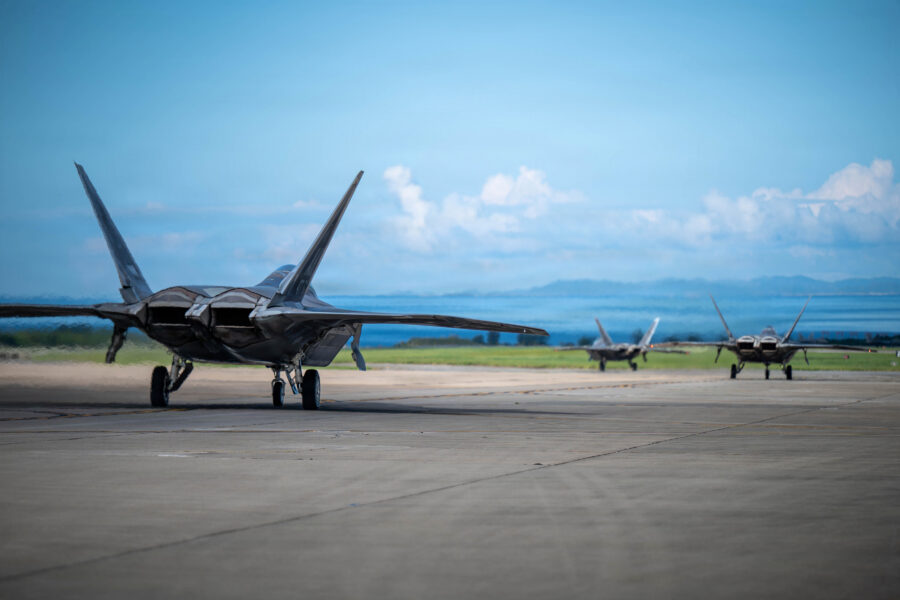
The 18th Wing at Kadena Air Base is conducting a readiness exercise with two rotational fifth-generation fighter squadrons, including F-22s. The base is awaiting the arrival of its delayed F-15EX fighters. The exercise aims to enhance the wing's combat readiness.
-
Western military space leaders are facing challenges due to a shortage of launch sites, according to Aviation Week. This shortage is causing troubles for military space operations. The issue highlights the need for increased investment in space infrastructure.
-
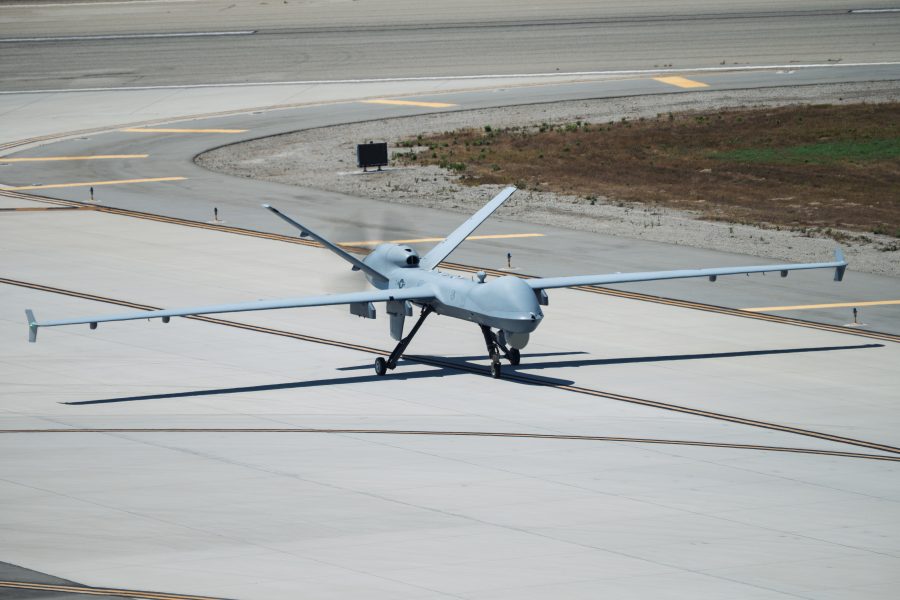
The Air Force is looking for new ideas to develop affordable, attritable drones that can perform the MQ-9 Reaper's intelligence, surveillance, and reconnaissance mission, as well as strike capabilities. Vendors are expected to be selected by the end of 2026. The goal is to find alternative solutions that can provide persistent capabilities in a new way.
-

The Space Force will conduct tests of satellite-to-satellite communications via optical laser-light links at K2, a key component of its future missile warning and tracking architecture. This technology is part of the Trump administration's Golden Dome missile defense shield.
-

The Space Force has chosen 15 companies to compete for building its advanced test and training range. The range will include live and simulated testing capabilities.
-
China's commercial satellite launches are increasing, driving demand for dedicated launch facilities. The country is expanding its military launch facilities and building new sites to support modern missions.
-
The Air Mobility Command (AMC) has introduced a new self-signup tool for Space-A travel, replacing the old registration method. This change aims to improve the travel experience for eligible passengers.
-

Xona, a startup, has secured spectrum approval for its 250-satellite navigation network, allowing it to transmit stronger signals near GPS frequencies. This development could enhance navigation capabilities. The approval is a significant step forward for the company's plans.
-

The US Army has formed a new project manager for space superiority and exploitation, responsible for delivering advanced space sensing and spectrum warfare systems. The project aims to support Army commanders with national capabilities. The new project manager, Colonel Carter G. Deekens, took command during an Assumption of Charter ceremony.
-

Airbus Defence and Space and Thales Alenia Space have been awarded a contract to build a replacement military communications satellite for Spain. The project is part of a broader space joint venture that also includes Leonardo. The new satellite will provide critical communications capabilities for Spain's military.
-
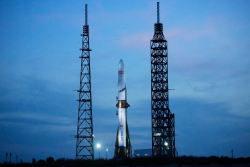
The US Air Force Research Laboratory has increased Blue Origin's contract by $11.7 million to study the use of space rockets for point-to-point deliveries. This expansion aims to explore the potential of space-based cargo transport. The contract is part of the Air Force's efforts to leverage commercial space technology for military logistics.
-

Russia's Rassvet satellite network, a rival to Starlink, has achieved steady coverage over Ukraine, providing reliable connectivity for over an hour daily. The system is being developed to counter Western satellite communications
-

Space-Eyes, a defense technology company, is going public through a $638 million SPAC merger with McKinley Acquisition Corp. The company's CATE AI engine provides geospatial intelligence and counter-drone capabilities by fusing radar, RF, and satellite feeds. This merger values Space-Eyes at $638 million in pro forma equity value and $370 million in enterprise value.
-

SpaceX launched a classified American spy satellite into orbit using a rocket booster that has flown to space and back seven times. The launch is part of a campaign by the National Reconnaissance Office, which has been quietly running at an unprecedented pace. The details of the satellite and its mission are not publicly disclosed.
