Space Technology
30 recent stories · Following ↗
-

Multiple constellations are staking claims for communications satellites in non-geostationary orbit, posing a challenge to newcomers in the industry. The market is dominated by vertically integrated giants like Starlink. Newcomers face an uphill battle to establish themselves alongside these entrenched players.
-

The US Navy conducted a test over the Pacific Ocean, creating a plasma field in the upper atmosphere to study energy conversion and behavior. The Naval Surface Warfare Center has released new details about the test in a recent report.
-
Kreios Space plans to demonstrate air-breathing electric propulsion, while K2 Space has secured a contract with the U.S. Space Force for optical link work. These advancements could significantly impact the future of space technology and military capabilities.
-

A custom SRAM-based chip design could reduce computing power needed by future space telescopes, potentially trimming satellite weight by 2,000 pounds. This innovation may lead to more efficient space missions. The new chip design aims to minimize the power consumption of space telescopes.
-

The Space Force will conduct tests of satellite-to-satellite communications via optical laser-light links at K2, a key component of its future missile warning and tracking architecture. This technology is part of the Trump administration's Golden Dome missile defense shield.
-
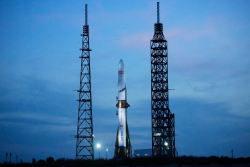
The US Air Force Research Laboratory has increased Blue Origin's contract by $11.7 million to study the use of space rockets for point-to-point deliveries. This expansion aims to explore the potential of space-based cargo transport. The contract is part of the Air Force's efforts to leverage commercial space technology for military logistics.
-

The Space Force has awarded K2 Space a $22.9 million contract for an orbital laser communications demonstration. Two K2 satellites will host optical terminals to connect military systems in orbit. This technology aims to enhance communication capabilities between military systems.
-

The US Air Force has awarded Blue Origin nearly $12 million to explore the use of its rockets for rapid military cargo delivery. The concept aims to transport cargo anywhere on Earth within an hour. Blue Origin will conduct a funded engineering study to assess the feasibility of this idea.
-

The Space Force aims to have a usable airborne moving target indicator program by 2028, with further refinements to follow. The program will provide a global targeting capability from space, requiring advancements in sensing, data processing, and orchestration.
-
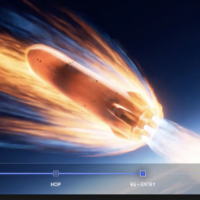
Hop Aero has launched its autonomous suborbital rocket, Rook, with the goal of delivering cargo via rocket. The company launched on Y Combinator this week.
-

MIT Lincoln Laboratory has proposed a laser-based satellite constellation for cislunar space to provide GPS-like capabilities for Moon missions. The system, called LightHOUSE, aims to enhance navigation and communication in the cislunar region. This technology could significantly improve the accuracy and reliability of space missions.
-

Orbes, a Southern California startup, has announced an agreement to send its Exo-ORB satellite to gather imagery of an uncrewed Symphony Space station. The Exo-ORB is a free-flying satellite designed for this purpose. This partnership marks a new development in space technology and collaboration.
-

General Dynamics Mission Systems (GDMS) has been awarded a $400M sole-source contract by the Space Development Agency (SDA) for Tranche 3 ground work, including software development, testing, and integration. The contract builds upon GDMS' existing software baseline and previous work with Iridium. The award is for the ground segment of the SDA's program.
-
City Labs is developing a tiny satellite powered by a nuclear battery, aiming to set a precedent in the field. The satellite is designed to demonstrate the feasibility of nuclear power in space. This technology could potentially enable longer-lasting and more efficient space missions.
-

Northrop Grumman has taken another charge for the solid rocket boosters it provides for the Vulcan Centaur, suggesting updated motors may not be ready until the end of the year. This development affects the Vulcan Centaur program. The charge indicates potential delays or issues with the program.
-

Italian startup ORiS has raised 5 million euros to develop wireless power-beaming technology for satellites using lasers. This technology aims to provide a new method for powering satellites. The funding will help ORiS advance its development of laser power-beaming technology.
-

A New York tech company has won a US federal research contract to develop quantum-inspired software that can identify unknown objects in orbit by shrinking models by 99%
-

The Pentagon is exploring space-based solar power, a technology that could provide a new source of energy. This initiative is mentioned alongside other defense-related events, such as the NATO summit and the Farnborough air show.
-

The Space Force's TacRS program has multiple Victus demonstration projects in the works, including the Jackal and Puma spacecraft chasing each other in the Victus Haze demo. A total of $300 million has been requested from fiscal 2027 to 2031 for these projects.
-

Orbit Fab has appointed Peter Shaper as CEO and added new board members as the company launches its Series B funding round. The company has secured over $25 million in interim financing. Shaper will lead the company's shift from technology development to commercial operations.
-

SpaceX plans to launch Starship on July 16 to test fixes from the previous flight and deploy Starlink satellites. The launch aims to address issues from the prior flight and ensure the successful deployment of functioning satellites.
-

Parabilis is testing a propulsion system for maneuverable cubesats, backed by the Space Force. The company's hybrid engine technology is being developed for small satellites. This technology aims to enhance the capabilities of small satellites in space.
-

Vantage Analytical has secured a potential $499M contract with the Air Force Research Laboratory (AFRL) to provide research and engineering services across the full space technology lifecycle. The contract work is divided into four areas, including mission development, flight experiments, and ground systems. Vantage Analytical was selected out of nine companies that submitted proposals.
-

The SDA TAP Lab has evolved into the BMC3I TAP Lab and partnered with Catalyst Campus to launch a multi-phased program aimed at accelerating mission-focused technology development. This program seeks to strengthen collaboration between commercial innovators and the government. The goal is to develop technologies that can support national security missions.
-
The US Department of Defense and Silicon Valley are investing in solar power beaming satellites, a growing focus for space operational energy. The Air Force plans to host industry days and collaborate with industry partners. This technology has the potential to provide a new source of power for space-based assets.
-

The Space Force has awarded Pulse Space a $40 million contract to develop laser systems that can transmit power and data between spacecraft. This technology aims to enable innovative capabilities for satellite operations. Pulse Space, a Washington-based startup, is leading the development of this laser power technology.
-
FireSat satellites use specialized cameras and imaging software to detect wildfires from space, potentially aiding firefighting efforts. Muon Space CEO Jonny Dyer discusses the technology's capabilities. The satellites could significantly improve early detection and response to destructive fires.
-

Apolink has established contact with its first satellite after a successful launch on SpaceX's July 7 rideshare mission. The satellite will be used for a data relay demonstration using an experimental license from the FCC.
-

SpaceX's satellite has won a test, demonstrating the Pentagon's commitment to competition in the industry. The military is rushing to deploy proliferated networks, with SpaceX's dominance attracting congressional scrutiny.
-
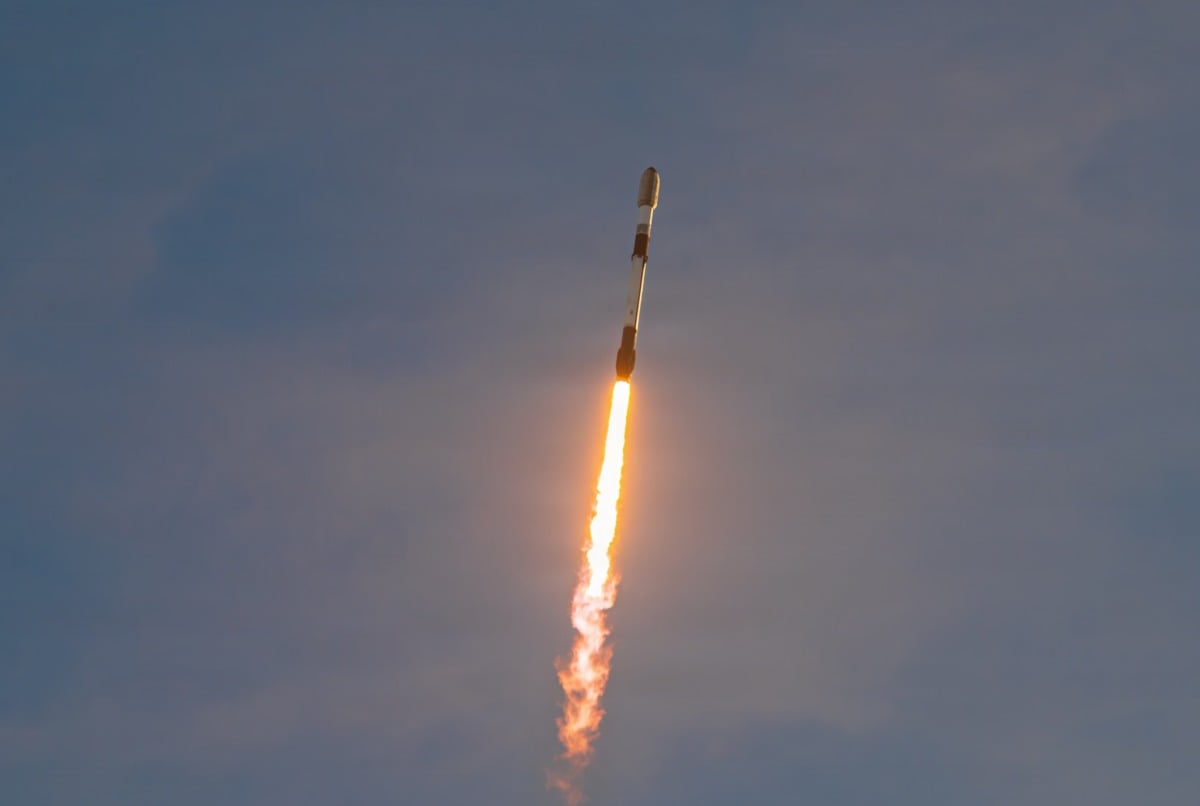
SpaceX's Starfall demonstration flight and Outpost Space's CarryAll Block 3 are being considered for military supply chain use in orbit. The recent flight sparked analyst interest due to its unusual silence, reminiscent of national security launches. This development could potentially transform orbit into a military supply chain.