Space
50 recent stories · Following ↗
-
Rocket Lab's suborbital launches at Pacific Spaceport Complex-Alaska could potentially lead to national-security launches, easing the Pentagon's launch bottleneck. The spaceport is being considered as a possible solution to the Pentagon's launch capacity issues. This development could have significant implications for the US military's space operations.
-

The National Reconnaissance Office has issued new contracts to three synthetic aperture radar satellite data providers. The contracts reflect the companies' successful demonstration of their capabilities under previous NRO study contracts. This development is related to the NRO's efforts to enhance its satellite capabilities.
-

The National Reconnaissance Office has awarded contracts to Capella Space, Iceye U.S., and Umbra to expand the use of commercial synthetic aperture radar. This move aims to enhance the U.S. government's capabilities in this area. The contracts will facilitate the provision of radar data from these commercial providers.
-
China's commercial space industry is growing rapidly in scale and speed, prompting concerns that the US may be outpaced in industrial capacity and output. CSIS experts argue that US policymakers must understand these trends to stay competitive.
-

Neuraspace has raised €15.6M to scale its SDA service, which is related to the increasing number of satellites in orbit and the importance of space for defense ministries. This investment will help Neuraspace expand its capabilities in the space domain. The company's service is crucial for defense ministries around the world as space becomes a more significant domain.
-

Muon Space's new manufacturing facility in San Jose, California, has been inaugurated, highlighting the growth of satellite manufacturing in the state despite cost and regulatory challenges. The facility was praised by state, local, and US Space Force representatives. This development indicates a strong industry presence in California.
-
The Department of the Air Force and Texas have formed a commercial space alliance to accelerate technology for national security missions. This alliance aims to speed up military technology and strengthen US supply chains. The partnership will focus on commercial space technology for national security purposes.
-
ICEYE, a space intelligence group, has secured €1 billion in Series F financing, with the European Commission-backed Scaleup Europe Fund as a lead investor. This investment values ICEYE above €10 billion. The funding will likely support the company's continued growth and development of its space-based intelligence capabilities.
-

A think tank warns that Europe is at risk of becoming dependent on foreign orbital computing infrastructure due to the rapid development of space-based data centers by US companies and China's government. The European Space Policy Institute highlights the widening gap in Europe's orbital compute capabilities. This gap could have significant implications for Europe's space-based data processing and storage capabilities.
-

SpaceX plans to start deploying upgraded Starlink satellites into orbit on its Starship vehicle, with the next flight scheduled for the end of the month. This marks a significant step for the company's Starship program. The upgraded Starlink satellites will be launched into orbit, expanding the company's satellite constellation.
-
Russia needs China's assistance to quadruple its military space rocket production. This collaboration is crucial for Russia's military expansion into space. The partnership may have significant implications for global space security.
-
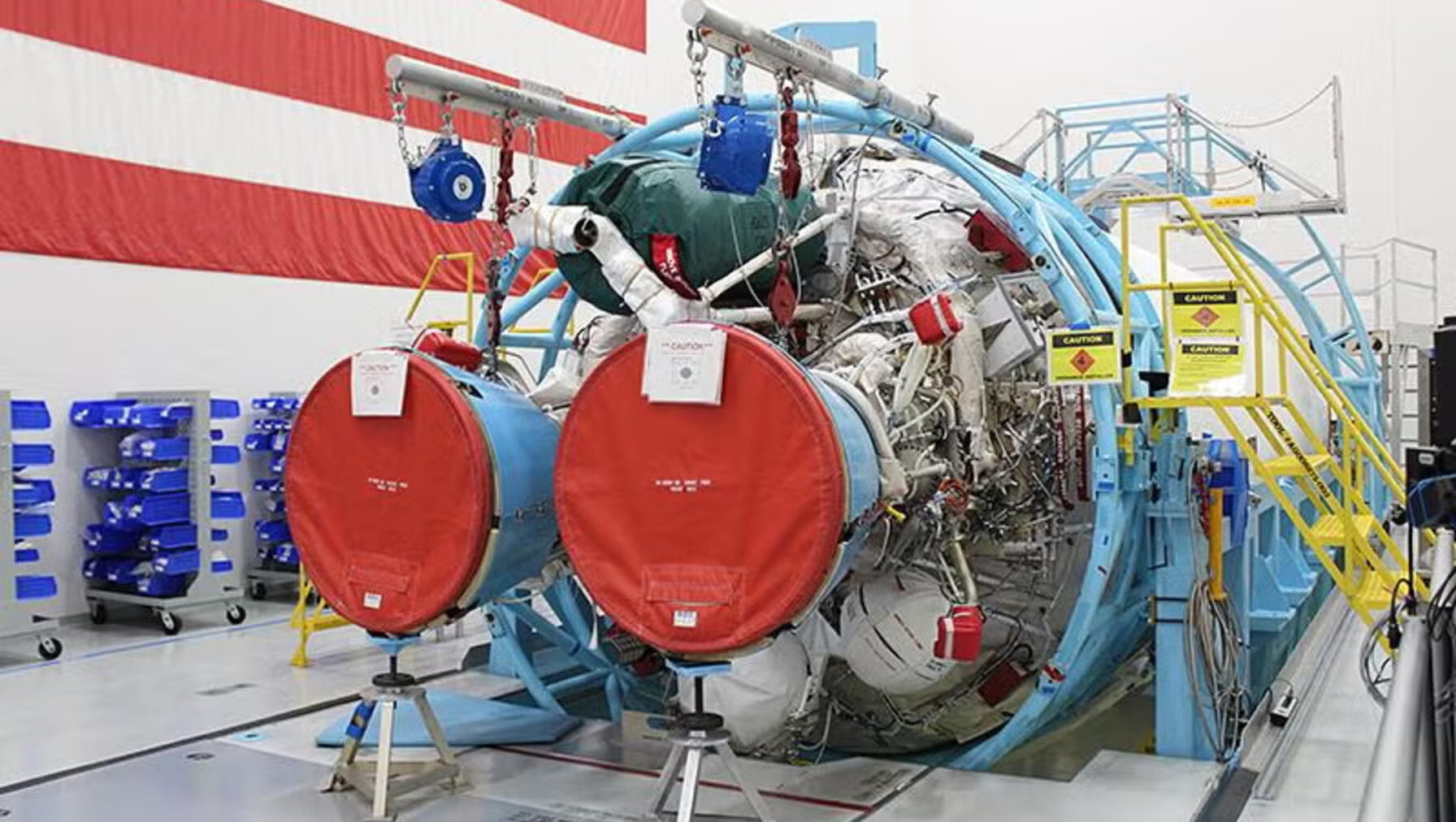
Private investors, through AE Industrial, have acquired a majority stake in L3Harris' space propulsion business, which will be re-established as Rocketdyne. The business has over 60 years of heritage in rocket engine manufacturing.
-

New research suggests that orbital data for satellite operators can be improved, which is crucial for decision-making. The quality and confidence of this data are essential for effective space operations. Improving this data can enhance the overall efficiency of space-based systems.
-

Startups and established manufacturers are investing in engines for small satellites to change orbit, driven by military demand. This investment is expected to shape the market for satellite propulsion. The development of these engines will provide small satellites with more freedom to maneuver in space.
-

Xona Space Systems has received FCC approval to broadcast its Pulsar navigation signals from a full satellite constellation, clearing the last regulatory hurdle before deployment. This approval allows the company to scale its deployment. The constellation is intended for PNT (Positioning, Navigation, and Timing) purposes.
-

Rocketdyne is now a standalone space company after AE Industrial acquired a 60% stake, with L3Harris retaining a noncontrolling interest. This move marks a significant development in the space industry. The company's new status is expected to impact its operations and future projects.
-
Western military space leaders are facing challenges due to a shortage of launch sites, according to Aviation Week. This shortage is causing troubles for military space operations. The issue highlights the need for increased investment in space infrastructure.
-
China's commercial satellite launches are increasing, driving demand for dedicated launch facilities. The country is expanding its military launch facilities and building new sites to support modern missions.
-

Xona, a startup, has secured spectrum approval for its 250-satellite navigation network, allowing it to transmit stronger signals near GPS frequencies. This development could enhance navigation capabilities. The approval is a significant step forward for the company's plans.
-

The US Army has formed a new project manager for space superiority and exploitation, responsible for delivering advanced space sensing and spectrum warfare systems. The project aims to support Army commanders with national capabilities. The new project manager, Colonel Carter G. Deekens, took command during an Assumption of Charter ceremony.
-

Airbus Defence and Space and Thales Alenia Space have been awarded a contract to build a replacement military communications satellite for Spain. The project is part of a broader space joint venture that also includes Leonardo. The new satellite will provide critical communications capabilities for Spain's military.
-

Russia's Rassvet satellite network, a rival to Starlink, has achieved steady coverage over Ukraine, providing reliable connectivity for over an hour daily. The system is being developed to counter Western satellite communications
-

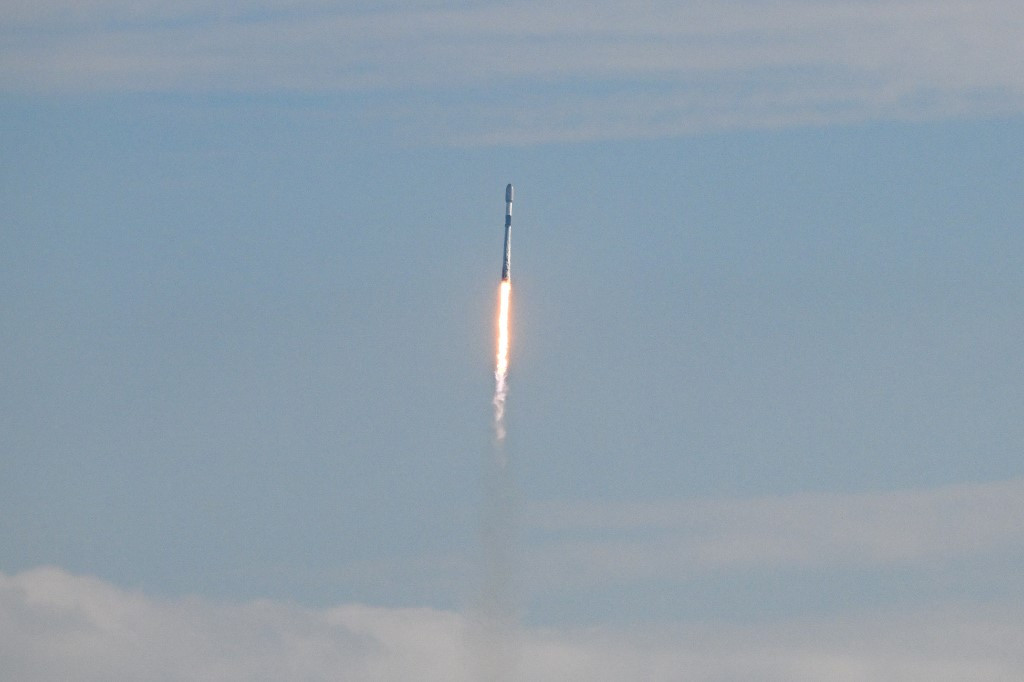
SpaceX launched a classified American spy satellite into orbit using a rocket booster that has flown to space and back seven times. The launch is part of a campaign by the National Reconnaissance Office, which has been quietly running at an unprecedented pace. The details of the satellite and its mission are not publicly disclosed.
-

Peraton has received a $109.1 million contract from the U.S. Space Force to maintain the Space Weather Analysis and Forecast System. The contract will run through 2033 and is a sole-source acquisition.
-

China has launched a pair of secretive satellites, known as TJS-27, into a new orbit, and also upgraded its communications relay capabilities with a new Tianlian relay satellite. The launch was carried out by a Long March 6A rocket. The new satellites are expected to enhance China's space-based communications and reconnaissance capabilities.
-
The first batch of 16 Russian 'Rassvet' satellites has reached its operational orbit and is providing daily communication windows over Ukraine. These windows could allow Russian forces to control their assets in the region. The satellites pass over Ukraine four times a day, with two or three passes being high enough for stable connections.
-

The 4th Space Launch Squadron officially reactivated at Vandenberg during a ceremony. The squadron's reactivation is a significant development in the US space program.
-
China's commercial space industry has grown from fewer than a dozen firms to around 600 since 2014, when Beijing opened the sector to private investment. A new CSIS analysis explores this expansion. China's space ecosystem is rapidly evolving with increased private investment.
-
Space Delta 12 held a change of command ceremony at Schriever Space Force Base, where Col. Sacha N. Tomlinson relinquished command to Col. Anna Gunn-Golkin. The delta leads the integrated test and evaluation of U.S. Space Force capabilities. The ceremony was presided by Maj. Gen. James E. Smith.
-
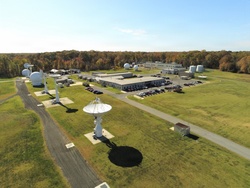
The Naval Research Laboratory's Blossom Point Tracking Facility has been a key part of US space operations for 70 years, tracking satellites and serving as a mission operations hub. It began operating in 1956 and has been instrumental in the American Space Age. The facility has evolved to support complex space missions.
-

The Space Force Association's National Spacepower Center is creating an unclassified environment to demonstrate threats to satellites and their consequences on Earth. This effort aims to show Congress what war in space looks like. The center's goal is to educate lawmakers about the potential risks and consequences of space warfare.
-

Experts call for space safety guidelines as companies develop large constellations of orbital data center satellites. This is crucial for preventing collisions and ensuring safe operations in space. The development of these constellations is a growing concern for space safety and regulation.
-

K2 Space, a satellite manufacturer, has raised $500 million in a Series D funding round, more than doubling its valuation in seven months. The funds will be used to ramp up production to as many as 100 large spacecraft per year. This expansion will cater to both commercial and defense satellite markets.
-
China views space as crucial to its long-term interests, with Chinese firms and state entities increasing patent filings for space-related technologies over the past 7 years. This indicates a significant focus on space technology development. China's space ambitions are growing rapidly.
-
Thales Alenia Space has been contracted to build Italy's newest hyperspectral satellite, which will have triple the resolution of its predecessors. The satellite is part of Italy's PRISMA second-generation hyperspectral mission. Airbus has also been tapped for a Spanish military replacement satellite, indicating a growing demand for advanced satellite technology in the European military sector.
-

The US Space Force has awarded SpaceX a $1.6 billion contract for 18 Falcon 9 launches to deploy sensing and targeting satellites. The contract is part of the Space Force's National Security Space Launch (NSSL) Phase 3 Lane 1 program. The launches will carry payloads for the Space Based Sensing and Targeting portfolio and will support military communications and targeting missions.
-

The Space Force has awarded All Points Logistics a $250 million contract to expand satellite processing facilities at Vandenberg. This is the third contract awarded under a Commercial Solutions Opening to enhance satellite inspection, testing, and preparation capabilities. The contract aims to support the integration of satellites with launch vehicles.
-
China's commercial space industry has grown significantly since 2014, with the number of firms increasing from fewer than a dozen to around 600 today. A new CSIS analysis explores this expansion, providing insights into China's commercial space ecosystem.
-

Fortastra, a startup focused on defending on-orbit infrastructure, is collaborating with Hadrian to improve satellite production using precision machining and additive manufacturing. The partnership aims to streamline the production process.
-

Boeing is working with NASA to schedule the next flight of its CST-100 Starliner commercial crew vehicle to the International Space Station. The mission will be a cargo flight. Boeing and NASA are determining the schedule for the flight.
-

A spacecraft launched to boost the orbit of a NASA astrophysics satellite is experiencing attitude control problems, potentially jeopardizing its mission. The mission was deemed high-risk from the start. The spacecraft's issues could impact the success of the reboost effort.
-

Lockheed's Tranche 1 Transport Layer satellites provide low-latency connectivity for JADC2 and Link-16 operations. The satellites support mission-critical operations across a growing LEO constellation.
-

The US will investigate Ukraine's claim that Russia shared satellite images of American bases with Iran. President Trump downplayed the potential impact on Iran's military capabilities.
-
A job opening for a Technical Specialist in Cleaning and Chemicals is available at Bishop GmbH in Bremen, related to the space industry. The position is listed on Flightglobal's job board.
-

The FCC plans to auction upper C-band spectrum next year, which could bring in over $6 billion for satellite operators who clear the spectrum quickly. This move is expected to boost the GEO industry. Satellite operators have welcomed this prospect, anticipating significant financial gains.
-

Sphinx Defense has been awarded a $287 million contract for strategic satellite communications software, covering mission planning for next-generation satellites. The contract is part of the Space Force's efforts to develop core mission planning software for its future fleet of nuclear command and control satellites.
-
Amazon is seeking approval for a 5,105-satellite constellation for direct-to-device services.
-

Rocket Lab has been awarded a $266 million contract by the US Space Force for up to 18 suborbital launches to support missile defense development. The launches will take place from a new facility in Alaska, with the majority of the missions occurring over the next three years. This contract marks the largest single launch agreement secured by Rocket Lab to date.
-
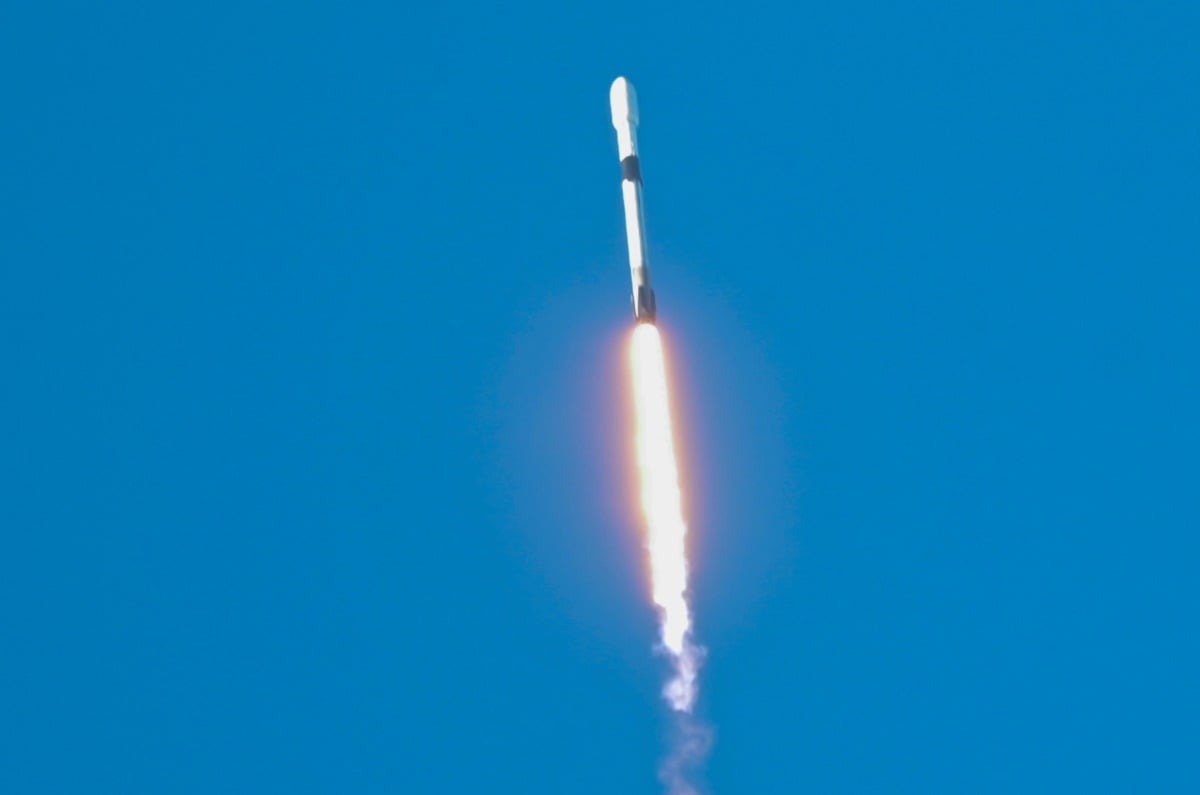
The US Space Development Agency awarded a contract to General Dynamics Mission Systems to develop the ground segment for Tranche Three of the Proliferated Warfighter Space Architecture, a network of missile-tracking satellites. The contract has a ceiling of $400 million. This project aims to enhance America's missile-tracking capabilities.
-
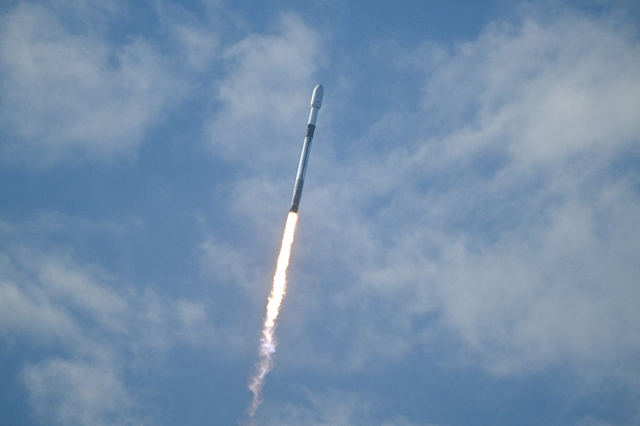
Ukraine's Stetman company is developing a 360-satellite network to reduce reliance on foreign-operated services like Starlink. The constellation, designed to serve state and military users, will be launched in phases, with the first 120 satellites scheduled for 2027. The network is intended to withstand electronic warfare.


